What Is Universal Design?
Universal design is the practice of designing buildings, products and spaces so that as many people as possible can use them, at any age or ability, without adaptation or a separate "special" version.

MembershipPlans from $29.99/month include store credit every month for ebooks, templates, cutouts and more.
Compare plans
Universal design is the practice of designing buildings, products and spaces so that as many people as possible can use them, at any age or ability, without adaptation or a separate "special" version.

A bubble diagram in architecture is a freehand sketch in which each room or activity is drawn as a circle, roughly sized to its area, and linked to other circles by lines that show how strongly they need to be near each other.

A design charrette is an intensive, multiday working session in which designers, decision makers and the people affected by a project sit in one studio and produce a plan together.

Tectonics in architecture is the art of making construction meaningful: the way a building shows how its parts are made, carried and joined.

Form follows function is the design principle that a building's shape should grow out of its purpose, its use, structure and needs, rather than from a borrowed style.

Rhythm in architecture is the patterned repetition of elements such as columns, windows, bays, fins or arches at measured intervals, so that the eye and the body read a building as a sequence rather than a single object.

The golden ratio in architecture is the proportion of roughly 1.618 to 1, where a whole relates to its larger part as the larger part relates to the smaller.

Symmetry in architecture is the ordered correspondence of parts around an axis, a center, or a repeating module, so that one portion of a building answers another.

Le Corbusier's five points of architecture are pilotis, the roof garden, the free plan, the horizontal ribbon window and the free facade.

An architecture portfolio template is a pre-built InDesign document with page parents, grids and text styles already set up, so your hours go into project content instead of layout mechanics. A good one hands you structure you can edit. A weak one forces your drawings into a shape they were...

Architectural lettering is the standardized handwriting used on drawings: upright single stroke capitals, drawn between light guide lines at a set height so notes stay readable at any print size. It grew out of drafting room practice and still governs how architects write on sheets, in sketchbooks and in CAD...

Terrazzo is a composite surfacing material made from chips of marble, quartz, granite, or recycled glass set into a binder of epoxy resin or cement, then ground and polished to a smooth finish. Architects use terrazzo for floors, stairs, walls, and countertops in airports, schools, hospitals, and homes where durability...

De Stijl in architecture and design was a Dutch movement (1917 to 1931) that reduced buildings, furniture, and painting to straight horizontal and vertical lines, flat planes, and the primary colors red, blue, and yellow plus black, white, and gray. It aimed for a universal visual language stripped of ornament...

Architecture sheet composition is the difference between a project that reads as a designed argument and one that reads as a filing cabinet of drawings. The sheets students produce in studio and the sheets professionals produce for client presentations follow the same underlying logic: each sheet should advance the project's...

Explore 2026 interior design trends, from Pantone’s Cloud Dancer to warm minimalism, flexible layouts, and calm, human-centered spaces.

Color shapes the way we experience the world, and in architecture, it’s a powerful tool that goes far beyond aesthetics. It influences how we feel in a space, how we interact with it, and even how we remember it. From calming blues in hospitals to vibrant reds in restaurants, every...

Architecture shapes the way we live, work, and interact with the world around us. It’s more than just buildings—it’s a blend of art, science, and functionality that reflects culture, history, and innovation. Every structure we encounter tells a story, and the elements of architecture are the key to understanding how...
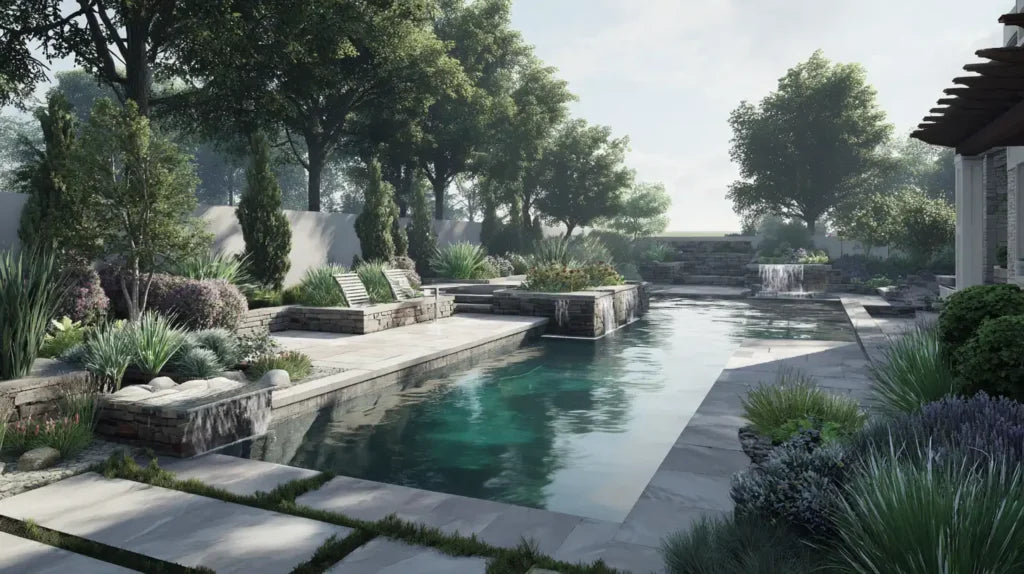
Creating a beautiful outdoor space isn’t just about planting a few flowers or laying some grass. It’s about crafting a harmonious balance between nature and design that reflects our style and meets our needs. Landscape design transforms any outdoor area into a functional, inviting, and visually stunning extension of our...

Fonts play a crucial role in how we communicate ideas, especially in the world of architecture. The right typeface can bring blueprints, presentations, and designs to life, reflecting precision, creativity, and professionalism. Architectural fonts aren't just about aesthetics—they're about making a statement. As architects, we know the importance of details,...

When customers need help, they don’t want to have to search all over for it. They want fast answers, clear options, and, above all, a sense that someone understands what they’re going through. That’s where great UX design comes in. Done well, it can turn frustrating support moments into seamless...