Centre Pompidou: Why Its Structure Is on the Outside
The Centre Pompidou has its structure on the outside because Renzo Piano, Richard Rogers and the engineers of Ove Arup & Partners wanted every floor inside to be one open, column-free plate.

The Centre Pompidou has its structure on the outside because Renzo Piano, Richard Rogers and the engineers of Ove Arup & Partners wanted every floor inside to be one open, column-free plate.

High-tech architecture is a late modernist style that emerged in Britain in the 1970s and treats a building's structure and mechanical services as its main visual language.

The Eiffel Tower was controversial because it put a 300 metre iron structure, designed by engineers, in the middle of a city that judged buildings by the stone traditions of the academy.

The difference between Art Nouveau vs Art Deco comes down to line and logic. Art Nouveau (roughly 1890 to 1914) grows from nature, using curving, asymmetrical "whiplash" forms in iron, glass and stone.

The Pantheon dome was built without steel by making it heavy where it needed to be and light where it could be.

The Sydney Opera House took 16 years to build because construction began in 1959 before its sail shaped roof shells had a workable engineering solution. The design competition was won in 1957, yet the geometry of the shells was not solved until 1961, forcing constant redesign, rework, and political pressure...

Fallingwater was built directly over a waterfall by anchoring reinforced concrete cantilevers into the natural sandstone bedrock of Bear Run, Pennsylvania. Frank Lloyd Wright designed the house in 1935 for the Kaufmann family so its terraces hover above the falls, with the stream running beneath the living room rather than...

The Parthenon's optical refinements are the deliberate curves, swellings, and tilts its builders added so the temple would look geometrically perfect to the human eye. Architects Iktinos and Kallikrates avoided true straight lines, bowing the floor upward, leaning the columns inward, and swelling each shaft to cancel out the visual...

The dome of Hagia Sophia works by carrying its weight through four curved triangular pendentives down to four massive piers at the corners of a square base. Two flanking semi-domes absorb the outward thrust, while a ring of 40 windows at the base lightens the rim and floods the interior...

Villa Savoye is a white reinforced concrete house in Poissy, France, designed by Le Corbusier and Pierre Jeanneret between 1928 and 1931. It put his five points of modern architecture into one building, and it became a reference for modernist design worldwide. UNESCO added it to the World Heritage List...

A brutalist architecture guide is an entry point into one of the most polarizing movements in modern building history.

Bauhaus architecture influence refers to the far-reaching effect that the Bauhaus school, founded in Weimar, Germany in 1919, had on the way buildings, interiors, and everyday objects are designed.

A cost comparison of the world's most expensive buildings ever constructed, covering religious megastructures, luxury resorts, corporate campuses and sports venues. Includes real figures, design context and what drives billion-dollar construction budgets across continents.

Notre-Dame Cathedral stands as the defining achievement of Gothic architecture, uniting structural innovation, spiritual symbolism, and urban identity. Through light, verticality, and masterful engineering, the cathedral reshaped architectural thinking and continues to influence contemporary design culture.

The Sagrada Família stands as one of architecture’s most ambitious experiments, where nature, geometry, and faith converge into a single spatial vision. Designed by Antoni Gaudí, the basilica transforms sacred geometry and natural systems into structural and symbolic language. This article explores how mathematics, light, and biomimicry shape one of...

When it comes to iconic art museums, the Guggenheim name stands out as a symbol of innovation and creativity. With their unique architecture and world-class collections, these museums have become cultural landmarks that captivate art lovers and travelers alike. Each Guggenheim location offers a distinct experience, blending art, history, and...

When we think of groundbreaking architecture that bends the rules of design, Frank Gehry's name instantly comes to mind. Known for his bold, unconventional style, Gehry has transformed skylines and redefined what buildings can be. His work isn't just architecture—it’s art that challenges our perception of form and function.
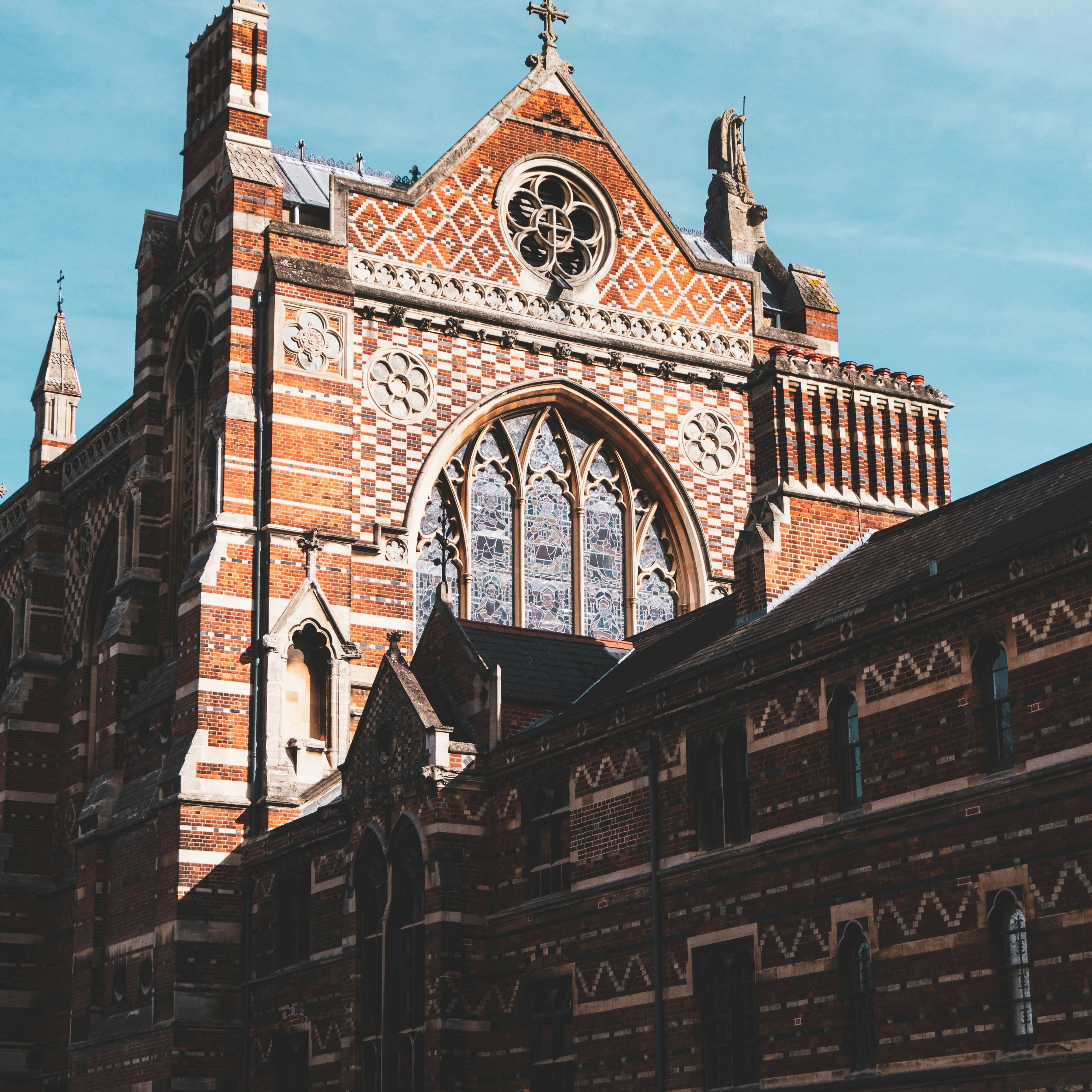
Victorian architecture takes us back to a time of elegance and intricate design. Emerging during Queen Victoria's reign in the 19th century, this style reflects a blend of innovation and tradition. From ornate facades to steep gabled roofs, every detail tells a story of craftsmanship and cultural transformation. It's no...