How Was the Pantheon's Dome Built Without Steel?
The Pantheon dome was built without steel by making it heavy where it needed to be and light where it could be.

The Pantheon dome was built without steel by making it heavy where it needed to be and light where it could be.

A seamless concrete texture is an image whose left edge matches its right edge and whose top matches its bottom, so it repeats across a surface without a visible join. The seam disappears, but the repeat itself often does not. Hiding that repeat is the real work. Most architects find...

A waffle slab is a reinforced concrete floor system made of a thin top slab supported by a grid of ribs running in two directions, which leaves a waffle-like pattern on the underside. It is used where floors must carry heavy loads across long spans, typically 9 to 15 meters,...

Formwork in concrete construction is the temporary mould that contains fresh concrete, shapes it to the required dimensions, and supports it until the material gains enough strength to carry its own weight. Crews build most formwork from timber, plywood, steel, or aluminum, then strip it away once the concrete has...

Reinforced concrete is a composite material that joins concrete, which is strong under compression, with steel bars that are strong under tension. The steel carries the pulling and bending forces that would crack plain concrete on its own, so the two materials act as a single structural unit in beams,...

Post-tensioned concrete is a reinforcing method where high-strength steel tendons are pulled tight after the concrete has hardened, squeezing the member into compression. That built-in compression lets the concrete resist tension loads it normally cracks under, so engineers can build longer spans, thinner slabs, and more open floor plates. Concrete...

A lintel above a door or window is a horizontal structural member that bridges the opening and carries the weight of the wall, floor, or roof above it. The lintel collects this load and transfers it down through its bearings into the masonry, framing, or columns on each side, keeping...

An expansion joint in buildings is a deliberate gap built through a structure that lets adjacent sections expand, contract, and settle independently. It absorbs movement caused by temperature swings, moisture, and seismic activity, which keeps stress from building up and prevents cracking in walls, slabs, and facades. Every building moves....

Terrazzo is a composite surfacing material made from chips of marble, quartz, granite, or recycled glass set into a binder of epoxy resin or cement, then ground and polished to a smooth finish. Architects use terrazzo for floors, stairs, walls, and countertops in airports, schools, hospitals, and homes where durability...

Autoclaved aerated concrete (AAC) is a lightweight precast building material made from sand or fly ash, lime, cement, water and a small amount of aluminium powder, then cured in a high pressure steam chamber called an autoclave. Roughly 80 percent of a finished block is trapped air, which gives AAC...

Fallingwater was built directly over a waterfall by anchoring reinforced concrete cantilevers into the natural sandstone bedrock of Bear Run, Pennsylvania. Frank Lloyd Wright designed the house in 1935 for the Kaufmann family so its terraces hover above the falls, with the stream running beneath the living room rather than...

A brutalist architecture guide is an entry point into one of the most polarizing movements in modern building history.
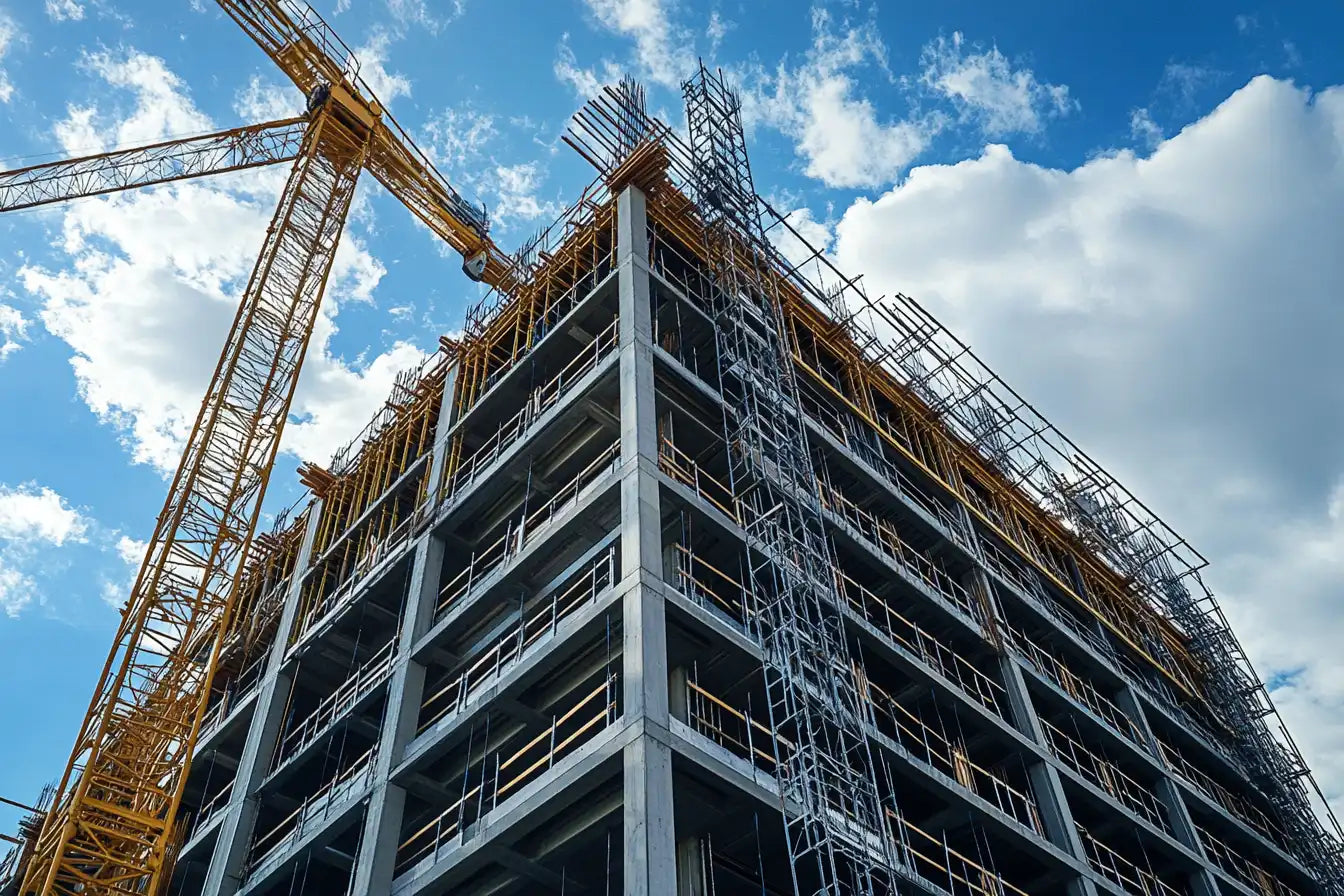
As architects, we're always on the lookout for the most efficient and sustainable construction materials. The right choices can transform a good design into a great one, ensuring durability, aesthetics, and cost-effectiveness. In the USA, the landscape of construction materials is vast, but some stand out as particularly useful for...

The practice of tile roofing has been there in China since 10000 BC. However, at that time, Chinese people used to build their roofs using clay tiles. This technique later spread to the Middle East and other areas of the world. With time, people started using different materials for tile...